Hair & skin
Your first skin consultation: a practical guide to arriving prepared
You don’t need to know your diagnosis before asking for help. A clear account of your concern and what you’ve tried gives a clinician a useful starting point.
The short answer
What to know first
- Bring your medicine and skin-product list, plus a timeline of the concern.
- Ask whether NHS, private or specialist care is the appropriate route.
- A consultation may lead to advice, treatment or referral; it does not guarantee a procedure.
Make a short note before you come
Describe what has changed, when it began and where on the body it occurs. Note whether it comes and goes, what seems to trigger it and how it affects sleep, comfort or confidence. If the concern changes between visits, existing photographs can help explain the pattern.
List prescribed medicines, supplements, allergies and everything you apply to your skin. Include products that have not helped and how long you used them. Bring packaging or photographs of ingredient labels if that is easier than remembering names. Do not stop prescribed treatment simply to prepare for an appointment.
- Your main question and what you hope to understand
- When the concern started and anything that changed around that time
- Previous treatment, its duration and your response
- Relevant medical history, pregnancy or breastfeeding
What the Pharmacillin consultation can clarify
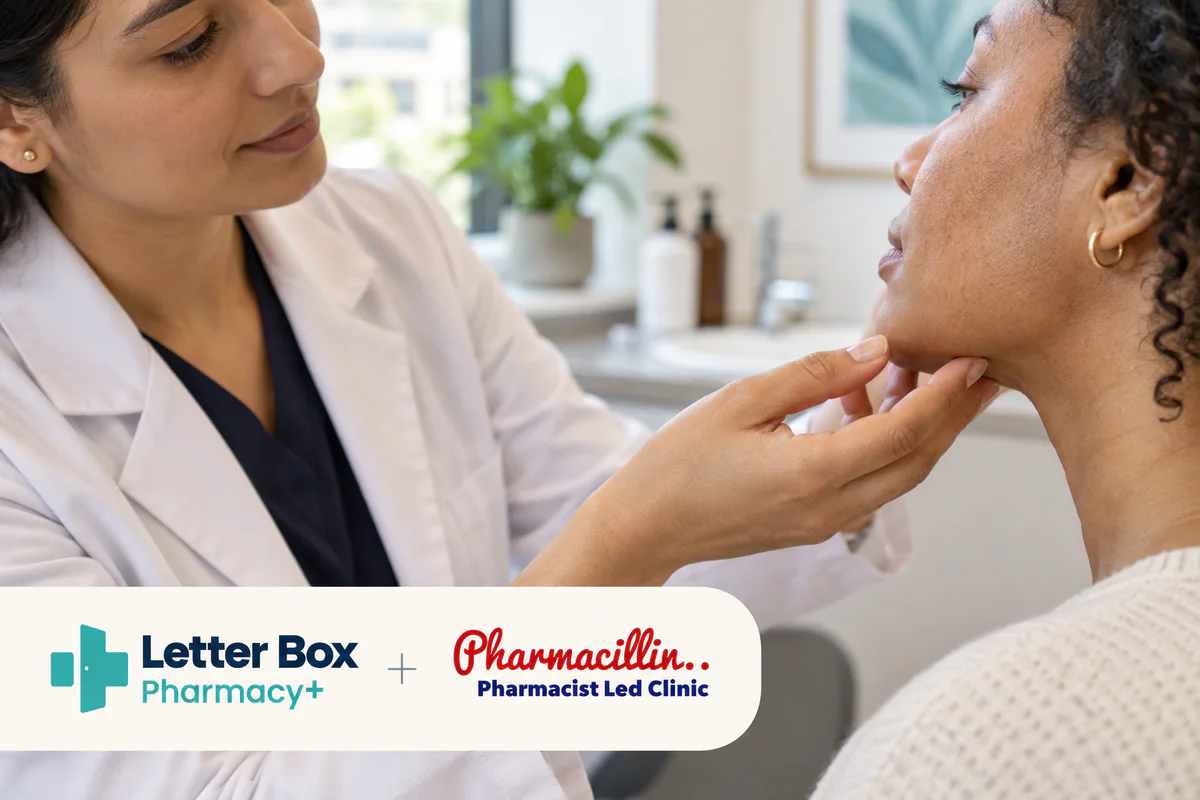
Pharmacillin provides private pharmacist-led consultations at the Letterbox Pharmacy Clinic, 4 Brick Lane. Its skin-health pathway covers common concerns such as acne, eczema and psoriasis; its aesthetics pathway begins with a separate discussion of goals and suitability.
Ask the clinician to explain the working assessment, alternatives, likely review interval and the limits of care in this setting. Some concerns need GP or specialist review. Before proceeding, establish the total cost, what follow-up includes and how to contact the team about a problem.
Guidance: Pharmacillin
Choose the right level of care
Some skin conditions, including eligible cases of impetigo and infected insect bites, may be assessed through NHS Pharmacy First. Ask our pharmacy team whether that route applies before arranging private care.
For acne, pharmacy advice can help with mild symptoms; the NHS advises seeing a GP for moderate or severe acne or when it is making you very unhappy. Tell the clinician about scarring or the impact on your wellbeing.
A mole that changes size, shape or colour, becomes painful, itchy or bleeds needs GP assessment. Do not treat a cosmetic appointment as a substitute for that check.
Common questions
Frequently asked questions
Is a skin consultation the same as an aesthetics appointment?
They have different purposes. A skin consultation considers a health concern; an aesthetics consultation explores a possible procedure, suitability, risks and alternatives. Explain your concern so the team can arrange the appropriate appointment.
Can I confirm the cost before booking?
Yes. Ask the team for the consultation fee and what it includes. If treatment, tests or follow-up would cost extra, ask for that explanation before deciding.
Guidance & partner information
Sources
Sources were checked on 10 September 2026. We prioritise current NHS, NICE, MHRA and regulator information.
Your next step
Pharmacillin at Letter Box Pharmacy
Read the service details, eligibility and booking information before you begin.
Explore the Brick Lane skin clinic